
The words “skull” and “scull” sound the same in standard English. Yet their meanings are completely different. One belongs to anatomy, while the other belongs mainly to rowing and boating. This guide explains the skull or scull difference with simple definitions, examples, memory tricks, and usage rules.
If you often confuse similar English words, you may also find our guide to Requester vs. Requestor useful for improving your word usage and spelling accuracy.
Skull or Scull: Which Word Is Correct?
Both “skull” and “scull” are correct English words. The right choice depends on the context and meaning. Use “skull” when you mean the bones of the head. Use “scull” when you mean an oar, a small rowing boat, or the act of rowing with a pair of oars.
The correct spelling therefore depends on what you want to say. These words are commonly confused words because they have identical standard pronunciations in US English. They are also useful examples of homophones, which sound alike but have different spellings and meanings.
Quick Answer
The skull is part of the human body. It surrounds and protects the brain and helps form the shape of the head. “Scull” is connected with “rowing,” where it can mean an oar, a small boat, or the action of rowing with two oars.
When to Use Skull
Use “skull” in medical contexts, biology, forensic science, archaeology, and ordinary descriptions of the head. Phrases such as “skull fracture,” “human skull,” and “dinosaur skull” all refer to a bone structure, not a boat or rowing tool.
When to Use Scull
Use “scull” in rowing sports, sculling, boating, and related nautical terminology. It can describe a small oar, a small light rowing boat, or the action of rowing with a pair of oars. (Cambridge Dictionary)
One-Line Difference
The simplest decision guide is this: “skull” means the bones of the head, while “scull” relates to rowing. If the sentence involves the brain, head, or bones, choose skull. If it involves an oar, boat, or rowing action, choose scull.
What Does “Skull” Mean?
The skull means the group of bones that surrounds the brain and gives the head its shape. Cambridge Dictionary defines “skull” as the bones of the head that surround the brain. This makes “skull” an important term in anatomy, biology, medicine, archaeology, and everyday English.
The skull definition is easy to remember because it always points toward the head and its protective bone structure. In medical terminology, doctors may discuss a skull fracture, skull injury, or skull scan. In forensic science, investigators can also study skulls when examining human remains.
Skull Definition in Simple English
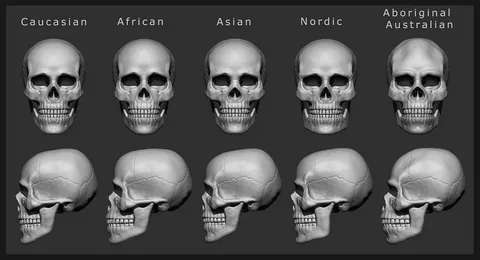
A skull is the hard bone structure inside your head. It surrounds the brain and forms much of the framework of your face and head. It contains several bones that work together as part of the skeleton and help protect delicate tissues.
What the Skull Does
The skull has an important role in brain protection. It also supports the facial features and provides attachment points for muscles. In simple terms, the skull creates a strong framework around the brain while helping form the overall shape of the head.
Parts of the Skull
The skull contains multiple bones rather than being one simple solid bone. The cranium surrounds the brain, while facial bones form structures such as the jaw, nose, and eye sockets. This distinction matters in biology, medicine, and scientific descriptions of the human body.
Medical and Scientific Uses
Doctors may use terms such as skull fracture, skull injury, or skull imaging when discussing trauma. A CT scan can help doctors examine the skull and nearby structures. These terms are common in medical reports, textbooks, and patient information.
Everyday Uses of Skull
In everyday language, “skull” can simply mean a person’s head or the bones inside it. People may also use the word figuratively. For example, “Use your skull” can informally mean “Use your mind,” although such expressions are less formal.
Common Skull Phrases
Common expressions include “human skull,” “fractured skull,” “skull bone,” “skull injury,” “skull anatomy,” and “dinosaur skull.” Archaeologists may examine an ancient skull, while a scientist may study a fossil to understand an extinct animal’s head structure.
What Does “Scull” Mean?
The scull meaning belongs mainly to rowing and boating. Cambridge Dictionary defines “scull” as a small oar used as one of a pair. It can also mean a small light boat used for sculling or the act of rowing using a pair of oars.
The scull definition, therefore, has several connected meanings. A sentence about an oar, rowing boat, or athlete moving across water may require scull. Cambridge also uses sculls for certain races involving small boats in which each participant uses a pair of oars.
Scull as an Oar
A scull can mean a small oar used as one of a pair. Each oar helps a rower move the boat through the water. This is different from the everyday use of paddle, so precise boating terminology matters in rowing discussions.
Scull as a Boat
“Scull” can also refer to a small, light rowing boat designed for sculling. The word can therefore describe either the equipment or the boat itself. The surrounding sentence usually provides enough context clues to show which meaning is intended.
Scull as a Verb
As a verb, “scull” means to row a boat using a pair of oars. For example, “The athlete sculled across the river” describes a rowing action. Cambridge lists this verb meaning directly in its current English Dictionary entry.
What Sculling Means
Sculling is a form of rowing in which a person uses two oars. Cambridge describes sculling through its rowing definitions and related terminology. This makes sculling different from rowing techniques that use only one oar per rower.
Competitive Rowing
In competitive rowing, terms such as single scull, double scull, and quadruple scull identify different boat and crew arrangements. A single scull has one rower. A double has two. A quadruple has four, with each rower using two oars.
Skull vs. Scull: What Is the Real Difference?
The skull vs. scull difference is mainly semantic. The spelling changes by one letter, but the meanings move into entirely different fields. Skull belongs to anatomy and the human head. Scull belongs to rowing, boats, oars, and water-based sports.
The difference between “skull” and “scull” becomes clear when you examine their parts of speech. “Skull” is primarily a noun. Scull can function as a noun or verb. Their pronunciation is the same in standard US English, but their spelling and meaning are different. (Cambridge Dictionary)
Meaning and Definition Comparison
The basic comparison guide below shows the main distinction. It can help English learners quickly connect each spelling with its field.
| Feature | Skull | Scull |
| Main meaning | Bones of the head | Oar, boat, or rowing action |
| Main field | anatomy and medicine | rowing and boating |
| Typical noun | Skull bone | Scull boat or oar |
| Verb | Usually not the relevant use | To row using two oars |
| Related words | Brain, head, skeleton | Rower, oar, water |
| Common context | Medical or biological | Sports or nautical |
Part of Speech
“Skull” is normally used as a noun. “Scull” can be a noun or verb. For example, “The skull was examined” uses “skull” as a noun, while “They sculled across the lake” uses “scull” as a verb.
Anatomy vs. Rowing
Think of the two words as belonging to separate vocabulary worlds. Skull belongs to medical context, biology, archaeology, and forensic work. Scull belongs to sports contexts, rowing clubs, boating, and water transportation.
Spelling and Pronunciation
Both words are pronounced /skʌl/ in US English according to the Cambridge Dictionary. This shared pronunciation explains much of the spelling confusion. The spelling cannot be solved by sound alone, so you must use meaning and context.
Side-by-Side Examples
| Sentence | Correct Word | Reason |
| The doctor examined his fractured ___ | skull | It concerns the head. |
| The athlete trained in a single ___ | scull | It concerns rowing. |
| Scientists studied the ancient ___ | skull | It is an archaeological specimen. |
| She learned how to ___ across the lake. | scull | It describes rowing. |
Why Do Skull and Scull Get Confused?
The main reason is pronunciation. Both “skull” and “scull” are pronounced /skʌl/ in US English. When you hear the word rather than see it, the spelling gives you no immediate clue. That creates a natural problem for English learners and writers who rely heavily on sound.
Their visual similarity adds another problem. Only one letter changes, yet the meanings are far apart. A person writing quickly may produce a spelling error without noticing. Strong context clues can prevent this mistake because medical and rowing sentences usually contain very different vocabulary.
Same Pronunciation
These words are examples of homophones because they share pronunciation while differing in spelling and meaning. Their identical sound makes listening exercises especially tricky. Writers must select the correct spelling after considering the sentence’s subject.
One Letter Changes
The spelling difference is small: “skull” contains “k,” while “scull” contains “c.” That tiny difference creates a major change in meaning. This is why checking the surrounding sentence is more reliable than guessing from pronunciation.
Context Matters
Words around the target often reveal the answer. Brain, fracture, bone, head, and doctor strongly suggest skull. Oar, boat, rower, river, race, and rowing strongly suggest scull. These usage examples demonstrate why context is central to English word choice.
Less Familiar Vocabulary
Many people know “skull” because it appears in everyday speech. Scull is more specialized. People who rarely encounter rowing sports may know the sound but not the spelling. That limited exposure can increase spelling errors.
Typing and Autocorrect
Digital writing can add another layer of confusion. Spellcheck may identify an unfamiliar word, but it cannot always understand your intended meaning. You still need to choose the correct word based on context and communication purpose.
Limited Rowing Vocabulary
Because “scull” belongs to specialized sports vocabulary, many writers encounter it less often. Learning terms such as “sculling,” “rower,” “shell,” “oar,” and “scull boat” makes the spelling easier to recognize when you see it in sports writing.
How to Remember Skull vs. Scull
The easiest memory trick connects each word to its meaning. Think of the K in skull as standing for “kranium,” a word related to the head. Think of the C in scull as connected with canoeing or the course of a boat. These are memory aids, not etymological rules.
A second trick uses mental pictures. Imagine a human skull when you see the K spelling. Then imagine a rower holding two oars when you see the C spelling. Visual associations can make vocabulary building faster and improve writing confidence.
Memory Trick for Skull
Remember K = Kranium as a playful memory aid. The actual English word is “skull,” but the invented association helps you connect the K spelling with the head and bones.
Memory Trick for Scull
Remember C = Canoe as another simple memory aid. A scull is not a canoe, but both belong to the world of small boats and water sports. The association helps you remember the correct spelling.
Head vs. Boat
Use this quick mental test: head means skull; boat means scull. If your sentence describes bones, the brain, or facial structure, choose skull. If it describes oars, rowing, or a small boat, choose scull.
Visual Memory Trick
Picture two scenes. In the first, you see a human skull on a laboratory table. In the second, you see a rower moving a narrow boat across a lake. Matching the spelling to the image makes recall easier.
One-Second Test
Ask yourself what the sentence is about. If the answer is “a head,” write skull. If the answer is “rowing,” write scull. This simple decision guide works well for exams, editing, and everyday writing.
Skull or Scull in Real Sentences
Real sentences make the distinction easier because meaning becomes visible through surrounding words. A medical sentence naturally points toward “skull,” while a rowing sentence points toward “scull.” These sentence examples show how context determines the correct spelling.
The following examples cover several common situations. Notice how the vocabulary around each word provides clues. This is especially useful for English grammar, academic writing, professional writing, and exam questions involving commonly confused words.
Skull Examples
“The doctor examined the patient’s skull after the accident.” “The museum displayed an ancient skull.” “The CT scan showed no serious skull fracture.” Each example concerns the human body, medicine, history, or anatomy.
Scull Examples
“The rower practiced in a single scull.” “They watched the athletes scull across the river.” “The coach inspected the racing sculls.” Each example belongs to rowing, water, sports, or boating.
Medical and Scientific Examples
Scientists may study an ancient skull to learn about a species. Doctors may use a CT scan to examine injuries. Forensic specialists may examine skeletal remains. These examples belong to a biological context, medical context, or forensic setting.
Sports and Rowing Examples
A coach may teach a sculling technique to an athlete. A rower may train in a rowing boat. A competition may include single, double, or quadruple sculls. These terms belong to rowing vocabulary and sports context.
Everyday Examples
You might say, “He hit his skull during the fall.” You might also say, “She learned to scull on the lake.” The first concerns the head. The second describes a rowing action. The difference is clear when the sentences are complete.
Direct Contrast
Consider these two sentences: “The archaeologist found a skull near the river.” “The rower carried a scull near the river.” The location is identical, but the meanings differ completely. This demonstrates why context clues matter more than sound.
If you enjoy learning about other easily confused English terms, you can also read Segway or Segue for another useful spelling and meaning comparison.

Common Mistakes With Skull and Scull
The most common error is choosing the spelling from pronunciation. Since both words sound alike, writers may select whichever spelling looks familiar. Another mistake occurs when someone assumes “scull” means a single ordinary paddle. Its dictionary meaning is more specific and connected with paired oars and sculling.
Understanding these differences can prevent grammar mistakes, spelling mistakes, and unclear writing. If you are unsure, stop and identify the subject of the sentence. Ask whether you are discussing anatomy or rowing. That simple check usually resolves the problem immediately.
Scull for a Head
Writing “He injured his scull” when you mean the bones of his head is incorrect in standard modern usage. The intended word is skull. Medical and anatomical contexts consistently use the skull for the head structure.
Skull for a Boat
Writing “The athlete climbed into a skull” changes the meaning dramatically. If you mean the small rowing craft, the intended word is scull. The surrounding words “rower,” “oars,” and “race” make the intended meaning obvious.
Scull vs. Ordinary Paddle
“Scull” is not simply another spelling of “paddle.” Cambridge defines it as a small oar used as one of a pair and also uses a scull for a small boat associated with sculling.
Similar-Sounding Words
The pronunciation creates the strongest source of confusion. Because both forms sound alike, listening alone cannot reveal the spelling. Writers need to use meaning, subject, and context to select the correct form.
Spellcheck Problems
Spellcheck may not catch a wrong choice when both spellings are valid English words. For example, “The doctor examined the scull” contains a real English word, but it is wrong for the intended medical meaning. Human proofreading still matters.
Specialized Rowing Terms
Terms such as single scull, double scull, and quadruple scull appear in rowing. Learning these combinations gives you stronger vocabulary knowledge and makes specialized sports articles easier to understand.
Skull vs. Scull in Writing, Exams, and Everyday English
The distinction matters in many forms of writing. In medical writing, “skull” is standard. In archaeological writing, “skull” is common. In academic writing, you may encounter both words if a paper discusses human anatomy and rowing. In sports journalism, scull and sculling are more likely.
For professional writing, precision matters because one incorrect letter can change meaning completely. The same principle applies to exams. If a question asks you to complete a sentence, identify the subject first. Then choose the spelling that matches its meaning.
Medical Writing
Doctors, researchers, and health writers use “skull” when discussing the bones surrounding the brain. Terms such as skull fracture and skull anatomy belong to medical terminology. A scull would be inappropriate unless the document also discusses rowing or boats.
Academic Writing
Academic contexts demand precise word usage. A biology paper may discuss the skull. A sports science paper may discuss sculling. In either case, the writer should use the specialized vocabulary that matches the research topic.
History and Archaeology
Archaeologists may examine a fossil, ancient skull, or other skeletal remains. These terms help researchers describe physical evidence from past populations or species. Scull would generally be unrelated unless the research concerns historical boats or rowing.
Sports Writing
Sports writers may use “scull,” “sculls,” “sculling,” “rower,” “oar,” and “rowing boat.” These terms are part of specialized sports vocabulary. Understanding them helps readers follow reports about training, racing, athletes, and rowing clubs.
Boating Terminology
In boating discussions, “scull” can refer to an oar, boat, or rowing action. The exact meaning depends on context. Related nautical terminology includes “oar,” “shell,” “rowing,” and “sculling.” Cambridge specifically connects scull with small boats and paired oars.
Exams and Tests
A spelling test may deliberately use “skull” and “scull” because they are easy to confuse. Read the entire sentence before answering. Look for words related to anatomy, medicine, rowing, boats, water, or sports.
Blogging and SEO
For online writing, accurate language clarity protects reader trust. A health article should use skull. A rowing article should use scull. Search engines may recognize both words, but readers still expect precise and natural communication.
Practice Quiz: Skull or Scull?
Now test your understanding. Choose “skull” when the sentence concerns the head, bones, or brain. Choose a scull when it concerns rowing, an oar, or a small rowing boat. This short self-assessment can reveal whether the spelling distinction is clear.
The goal is not memorization alone. Good English grammar depends on understanding meaning, context, and word relationships. After completing the examples, explain why each answer works. That extra step strengthens vocabulary and improves long-term recall.
Choose the Correct Word
Complete each sentence with “skull” or “scull.” “The doctor examined the patient’s ___.” “The athlete trained in a single ___.” “The archaeologist discovered an ancient ___.” “They learned how to ___ across the lake.” “The museum displayed a dinosaur ___.”
Fill in the Blanks
The correct answers are skull, scull, skull, scull, and skull. The first, third, and fifth sentences concern bones or anatomy. The second and fourth concern rowing. The surrounding vocabulary gives enough information to select the correct word.
Identify the Context
If you see words such as “brain,” “fracture,” “bone,” “archaeologist,” or “fossil,” think “skull.” If you see “rower,” “oar,” “lake,” “race,” “boat,” or “sculling,” think “scull.” These context groups form a useful memory trick for future writing.
Quick Challenge
Write one sentence about a human skull and one sentence about a rowing scull. Then switch the subjects and create two more examples. This simple practice forces you to use both words actively instead of only recognizing them.
Answers and Explanations
The key lesson is simple: a skull belongs to the head and its bones. Scull belongs to rowing and small boats. Once you connect each spelling to its subject area, the spelling errors become much easier to avoid.
Skull or Scull: Quick Reference Table
The quickest way to remember the distinction is to compare meaning, spelling, and context together. This table works as a final comparison guide for students, writers, editors, and anyone building stronger English vocabulary.
| Word | Meaning | Typical Context | Example |
| skull | Bones of the head | Anatomy and medicine | The skull protects the brain. |
| scull | Small oar | Rowing and boating | He lifted the scull. |
| scull | Small rowing boat | Water sports | She entered the scull. |
| scull | To row with two oars | Rowing action | They sculled across the lake. |
| skulls | More than one skull | Biology or archaeology | The museum displayed skulls. |
| sculls | More than one scull or rowing race | Rowing | The team entered the sculls. |
The most useful rule is also the shortest: skull = head; scull = rowing. Keep that connection in mind whenever pronunciation creates uncertainty. It provides a practical way to improve spelling, writing confidence, and everyday English.
Frequently Asked Questions About Skull or Scull
The distinction often raises similar questions because the words look almost identical. Most answers become simple once you separate meaning, pronunciation, and context. The following questions address the most common concerns about their spelling, grammar, pronunciation, and everyday use.
Are Skull and Scull Homophones?
Yes. In standard US English, both words are pronounced /skʌl/. Their spellings and meanings differ, so they are commonly treated as homophones. Cambridge gives the same US pronunciation for both words.
Is Scull a Type of Boat?
Yes. A scull can mean a small, light boat used for the sport of sculling. The word can also refer to an oar or the act of rowing with paired oars, so context determines the exact meaning.
Is “Skull” Only a Medical Word?
No. “Skull” is common in everyday English as well as medicine, biology, archaeology, and forensic science. People may refer to a human skull, skull fracture, dinosaur skull, or simply the skull as part of the head.
Is “scull” a Verb?
Yes. As a verb, “scull” means to row a boat using a pair of oars. For example, “They sculled across the lake” describes an action. This verb form is especially common in rowing and boating contexts.
What Is the Easiest Way to Remember Them?
Use the simple association K for skull and head and C for scull and craft. These are memory tricks rather than spelling rules. The strongest method is still context: anatomy points to skull, while rowing points to skull.
For another article about commonly confused words, you can also explore Incomplete vs. Uncomplete to strengthen your vocabulary and writing confidence.
Final Takeaway: Skull or Scull
The skull or scull distinction is easy once you connect each spelling with its meaning. “Skull” refers to the bones of the head and belongs to anatomy, medicine, biology, archaeology, and everyday language. “Scull” relates to oars, small boats, and rowing.
Remember one simple sentence: Your skull is in your head; a scull helps you row. That sentence captures the central difference. With regular practice and careful attention to context, you can avoid spelling mistakes and use both words with greater language clarity and writing confidence.