
Best Budget Smartphones Under $300 in 2026: Top Picks That Actually Impress
Let me say something that would have sounded ridiculous five years ago.
You do not need to spend $1,000 on a smartphone in 2026.
Not even close.
The best budget smartphones under $300 available right now take photos you cannot tell apart from flagships, run the latest apps without breaking a sweat, and in some cases come with software update promises that match or beat what premium phones offered just a few years ago.
The budget smartphone market in 2026 has genuinely changed. The sub-$300 smartphone market heading into 2026 is almost unrecognizable compared to what it was three years ago. Entry-level used to mean slow chipsets, dim LCDs, and cameras that turned every indoor shot into a guessing game. The segment now regularly ships with AMOLED displays, OIS-stabilized cameras, 5G modems, and durability ratings that once belonged exclusively to phones costing twice as much. Wikipedia
If you are buying a phone for yourself, your teenager, or anyone who does not need to flex with a $1,200 device—this guide is for you. Every recommendation here is based on real-world performance, honest trade-offs, and what actually matters in daily use.
Why Budget Phones Are So Good in 2026
Before the picks, let’s understand why this moment in smartphone history is so good for careful buyers.
Flagship smartphones costing $800-$1,200 offer marginal improvements over $250-$300 alternatives for most users. Average users checking email, browsing social media, and video calling experience negligible differences justifying 3-4x higher costs. Smartphone technology has matured substantially—five years ago, budget phones offered compromised experiences with lag.
That maturity is real. The chipsets powering today’s sub-$300 phones handle everything the average person actually does — streaming, social media, navigation, photography, messaging, and casual gaming — without hesitation. The cameras capture genuinely impressive photos. The displays are bright, smooth, and colorful.
The best smartphone does not cost $1,000. That statement was controversial five years ago. In 2026, it’s just true.
What separates a smart buy from a disappointing one in this segment is understanding where the trade-offs exist—and making sure they do not affect anything you actually care about. That is exactly what this guide helps you do.
Why This Matters: Every dollar you save on a phone that meets your needs is a dollar that goes somewhere more useful. In 2026, there is genuinely no reason to overpay for a smartphone unless your use case specifically demands it.
The Most Important Thing to Check Before Buying Any Budget Phone
Here is something that most smartphone buyers do not think about until it is too late — and it is arguably more important than the camera, the display, or the processor.
Software update commitment.
Software support has become one of the clearest differentiators in the sub-$300 market. Samsung’s Galaxy A17 5G commits to six major OS updates and six years of security patches through 2031, a promise that now matches what Samsung’s own flagship buyers received a few years ago. For someone who replaces phones infrequently or passes devices down within a family, that window changes the total value calculation more than any hardware spec.
Think about it this way. A phone that costs $200 but stops receiving security updates after 18 months is effectively a ticking security liability. A phone that costs $280 but receives updates through 2031 is genuinely the better long-term investment — even if its specs look similar on paper.
One OS update means a phone reaches software end-of-life while it’s still inside the typical two-year replacement cycle for budget buyers. Motorola’s single-update commitment on the G Power 2025 is a meaningful long-term weakness in a device that otherwise scores well on hardware.
Always check the update commitment before you buy. It is the single most underrated specification in the budget smartphone market.
Samsung Galaxy A17 5G — Best Overall Budget Phone Under $300
If you want one recommendation and nothing else, this is it.
The Samsung Galaxy A17 5G is, quite simply, the best all-around budget phone you can buy right now. It delivers exceptional value with a winning combination of display quality, battery life, camera performance, and — critically — long-term software support. IMDb
Six years of OS updates at a sub-$300 price is the sentence that defines the Samsung Galaxy A17 5G. Android updates through 2031 mean the A17 5G will still receive current software when most competitors in this roundup have been abandoned by their makers. For a family device, a first smartphone, or anyone who upgrades infrequently, that commitment changes the value calculation more than any spec on the sheet.
The display is a 6.7-inch AMOLED panel running at 90Hz — genuinely good by any standard, let alone the budget segment. The camera handles everyday photography confidently, with solid performance in well-lit conditions and acceptable results in lower light. Battery life stretches comfortably through a full day of normal use and then some.
The Galaxy A17 5G is best for families, first smartphone buyers, anyone who keeps phones for three or more years, and anyone who values long-term security over cutting-edge specs.
Samsung Galaxy A36 5G — Best Display Under $300
The Samsung Galaxy A36 5G offers the strongest display here—a 1900-nit AMOLED panel, a Sony IMX882 OIS camera, 45W charging, and six years of software support. Wikipedia
If you spend significant time outdoors or use your phone in bright sunlight regularly, the A36’s display brightness makes a noticeable real-world difference. The OIS-stabilized Sony camera sensor is a meaningful upgrade for anyone who takes photos in motion or in lower light conditions.
At a slightly higher price point within the $300 budget, the A36 is the choice for display-focused buyers and photography enthusiasts who want the best camera the sub-$300 segment can offer from Samsung.
Google Pixel 8a — Best Camera and AI Features Under $300
For pure camera performance and software experience, nothing in this price range touches Google’s budget flagship.
For under $300, the Pixel 8a offers the best value after its price drop to approximately $250. The Pixel 9a wins on camera quality and software update longevity — 7 years versus 4 years — while the Samsung Galaxy A55 wins on water resistance and expandable storage.
Google’s combination of the best camera processing, 7 years of updates, clean software, and strong AI features makes it the most complete package under $300. The combination makes it the most complete package under $300 for someone who wants flagship-level camera and AI features without paying flagship prices.
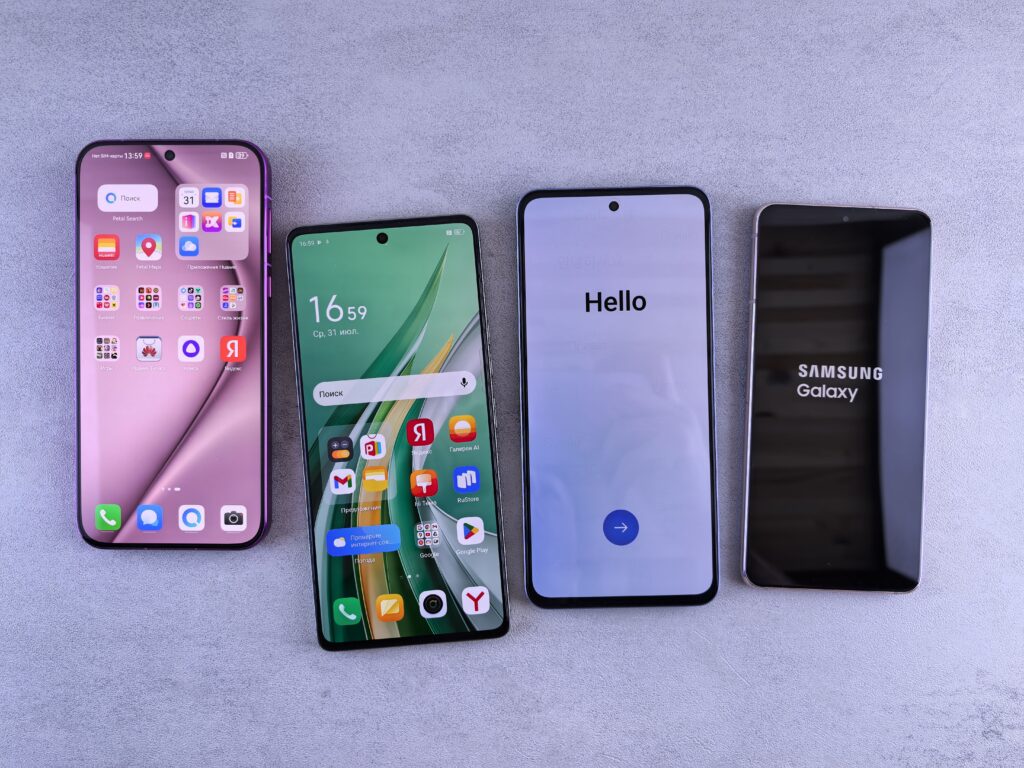
The Pixel 8a’s Google Tensor processor brings AI-powered photography features—Magic Eraser, Photo Unblur, and Best Take—that no other phone in this price range can match. If you take a lot of photos of family, travel, or events and want results that genuinely impress, the Pixel 8a is the answer.
The software experience is also the cleanest in the segment. Stock Android, immediate updates, no bloatware. If you want your phone to just work without manufacturer apps you never asked for, the Pixel is the choice.
The Pixel 8a is best for photography enthusiasts, Android purists, and anyone who uses Google services heavily throughout their day.
For a complete analysis of the best tech purchases under $300 in 2026, explore more at The News Magazine.
Redmi Note 14 Pro 5G — Best Camera Hardware on a Tight Budget
Here is a name that consistently surprises people who have not paid attention to what Xiaomi’s Redmi sub-brand has been building.
Competition across Asian OEMs has pushed the value math in the buyer’s favor to a degree that frankly surprised many reviewers when pulling these devices out of boxes. The Redmi Note 14 Pro 5G is the clearest evidence of that trend. Wikipedia
It ships with a 200MP main camera sensor — a specification that sounded impossible at this price point even two years ago. The display is a bright, high-refresh-rate AMOLED. Fast charging fills the battery quickly. Build quality feels premium well above its actual cost.
The Redmi Note 14 Pro 5G promises three OS updates — not as long as Samsung’s commitment, but reasonable for a phone at this price point.
The primary caveat is Xiaomi’s MIUI/HyperOS software layer, which includes more pre-installed apps than stock Android users prefer. If that does not bother you — and for many people it does not — the Redmi Note 14 Pro 5G delivers hardware specs per dollar that are genuinely hard to beat.
Best for: Camera-focused buyers on the tightest possible budget, international market buyers, and anyone comfortable with a slightly heavier software skin.
Motorola Moto G Power — Best Battery Life Under $300
Sometimes the most important thing about a smartphone is simply that it never dies on you.
If you are a heavy user, frequently away from chargers, travel often, or just hate the anxiety of watching your battery percentage drop—the Motorola Moto G Power is built for you.
The Moto G56 is the practical battery champion for people who care more about endurance than benchmark numbers. Motorola’s G Power line has consistently led the budget segment for battery stamina, and the 2026 iteration continues that tradition with a massive battery that stretches to two days of normal use for most people.
Motorola’s single-update commitment on the G Power 2025 is a meaningful long-term weakness—and it is worth being honest about that trade-off. If you plan to keep your phone for more than two years, the limited software support is a genuine concern.
But if you upgrade regularly or primarily need a reliable, long-lasting secondary phone — or a work device that needs to survive a full day in the field — the G Power’s battery performance justifies its place on this list.
How to Choose the Right Budget Phone for You: Step-by-Step
Shopping for a budget smartphone is not complicated once you know what questions to ask. Work through this in order.
Step 1: Decide your real budget. Within the sub-$300 category, there is meaningful variation between $150, $200, $250, and $299. The $200-$300 sweet spot delivers near-flagship experiences without premium pricing, while phones under $150 make compromises requiring realistic expectations.
Step 2: Check software update commitment first. Before looking at cameras, displays, or processors—find out how many years of OS and security updates the phone promises. Anything under three years is a red flag for a long-term buy.
Step 3: Match the phone to your primary use case. Photography → Pixel 8a. Battery life → Moto G Power. Long-term value → Samsung Galaxy A1 7. Best display → Samsung Galaxy A3 6. Camera hardware on a budget → Redmi Note 14 Pro.
Step 4: Verify 5G compatibility. The segment now regularly ships with 5G modems as standard. Make sure the specific model you are buying includes 5G support for your carrier’s bands. Wikipedia
Step 5: Check NFC if you use mobile payments. Not all budget phones include NFC for Google Pay or Apple Pay equivalents. If tap-to-pay is part of your daily routine, verify NFC is included before buying.
Step 6: Read current user reviews. With new models continuously entering this segment, the pecking order can shift again over the next few months — checking recent buyer reviews catches real-world issues that spec sheets never show.
What Budget Phones Cannot Do in 2026 — Be Honest With Yourself
This guide would not be complete without an honest list of where sub-$300 phones still fall short—because setting realistic expectations prevents disappointment.
Professional video recording remains a genuine weak point. Budget phones shoot acceptable video, but optical zoom, advanced stabilization for action footage, and log profile recording for editing are still premium features.
Sustained gaming performance over long sessions can cause thermal throttling on budget chipsets. Casual gaming is fine. Serious mobile gaming benefits from premium processors.
Zoom photography is typically limited. Budget phones with 3x or 5x optical zoom are rare. Most rely on digital zoom, which degrades quality quickly.
Ultra-premium build materials — titanium frames, ceramic backs, the weight and feel of a $1,000 device — are simply not present at this price point. Budget phones have improved dramatically in build quality, but the tactile premium feel of a flagship is genuinely different.
If none of those limitations apply to your actual use case, a budget phone is objectively the smarter purchase. Most people’s use cases fall comfortably within what sub-$300 phones handle well.
Read our detailed guide on making the most of your tech budget in 2026 at The News Magazine.
Frequently Asked Questions
Q1: What is the best budget smartphone under $300 in 2026?
A: The Samsung Galaxy A17 5G is the best overall choice for most people — combining six years of software updates, an AMOLED display, solid camera performance, and strong battery life at a genuinely competitive price. For the best camera experience, the Google Pixel 8a is the alternative recommendation.
Q2: Are budget phones worth buying in 2026?
A: Yes, genuinely. The best smartphone does not cost $1,000—that statement was controversial five years ago, and in 2026 it is simply true. For the majority of everyday use cases, budget phones under $300 deliver experiences that are difficult to meaningfully distinguish from phones costing three times as much.
Q3: How many years of updates should I expect from a budget phone?
A: Aim for a minimum of three years of OS updates. Samsung leads the sub-$300 category with six-year commitments on select models. Google’s Pixel 8a offers four years. Avoid phones promising only one update cycle if you plan to keep the device for more than 18 months.
Q4: Do budget phones under $300 have 5G in 2026?
A: Most do. The segment now regularly ships with 5G modems as a standard feature rather than a premium add-on. Always verify the specific model includes 5G bands compatible with your carrier before purchasing. Wikipedia
Q5: Is the Google Pixel 8a better than Samsung Galaxy budget phones?
A: It depends on your priority. The Pixel 8a has superior camera processing and AI features plus a cleaner software experience. Samsung Galaxy models like the A17 lead on software update longevity and ecosystem integration. Both are excellent choices for different buyers.
Q6: What budget phone has the best camera under $300?
A: For AI-enhanced camera processing and overall photo quality, the Google Pixel 8a leads the category. For raw camera hardware at the lowest price, the Redmi Note 14 Pro 5G with its 200MP sensor offers compelling specs per dollar.
Q7: Which budget phone has the longest battery life?
A: The Motorola Moto G Power line consistently leads the sub-$300 category for battery endurance, with real-world performance stretching to two full days for average users.
Q8: Should I buy a budget phone or a refurbished flagship?
A: Both are valid strategies in 2026. Finding a great smartphone for under $300 requires a mix of looking at the latest budget-tier releases and hunting for refurbished gems from flagships. A refurbished iPhone or Samsung flagship from two years ago can offer premium build quality at budget prices — though software support timelines should be checked carefully before buying. Facebook
The Best Phone Is the One That Fits Your Life — Not Someone Else’s Budget
Here is the simplest possible summary of everything in this guide.
The budget phone market is no longer about settling for the least bad option. The best budget smartphones under $300 in 2026 now offer distinct strengths, from Samsung’s long support cycle to Motorola’s battery stamina and Google’s camera excellence. The smartest buy depends less on headline specs and more on what matters to your day.
Charging speed. Camera balance. NFC. Software longevity. Battery endurance. Pick the two factors that matter most to you personally—then choose the phone that excels at exactly those things.
There are already several phones in this bracket that make spending $600 feel harder to justify. The Samsung Galaxy A17 5G, Google Pixel 8a, and Redmi Note 14 Pro 5G are the clearest examples of that. Any one of them will serve you well.
Do not let anyone convince you that you need to spend more to get a great smartphone in 2026. You do not.
Explore more tech guides and buyer advice at The News Magazine—honest, useful technology coverage updated daily in 2026.
Disclaimer: Product prices, specifications, and availability mentioned in this article are based on information available at the time of publication and may have changed. The News Magazine does not receive compensation for product mentions unless explicitly stated. Always verify current pricing directly with retailers before purchasing.